
September 23, 2026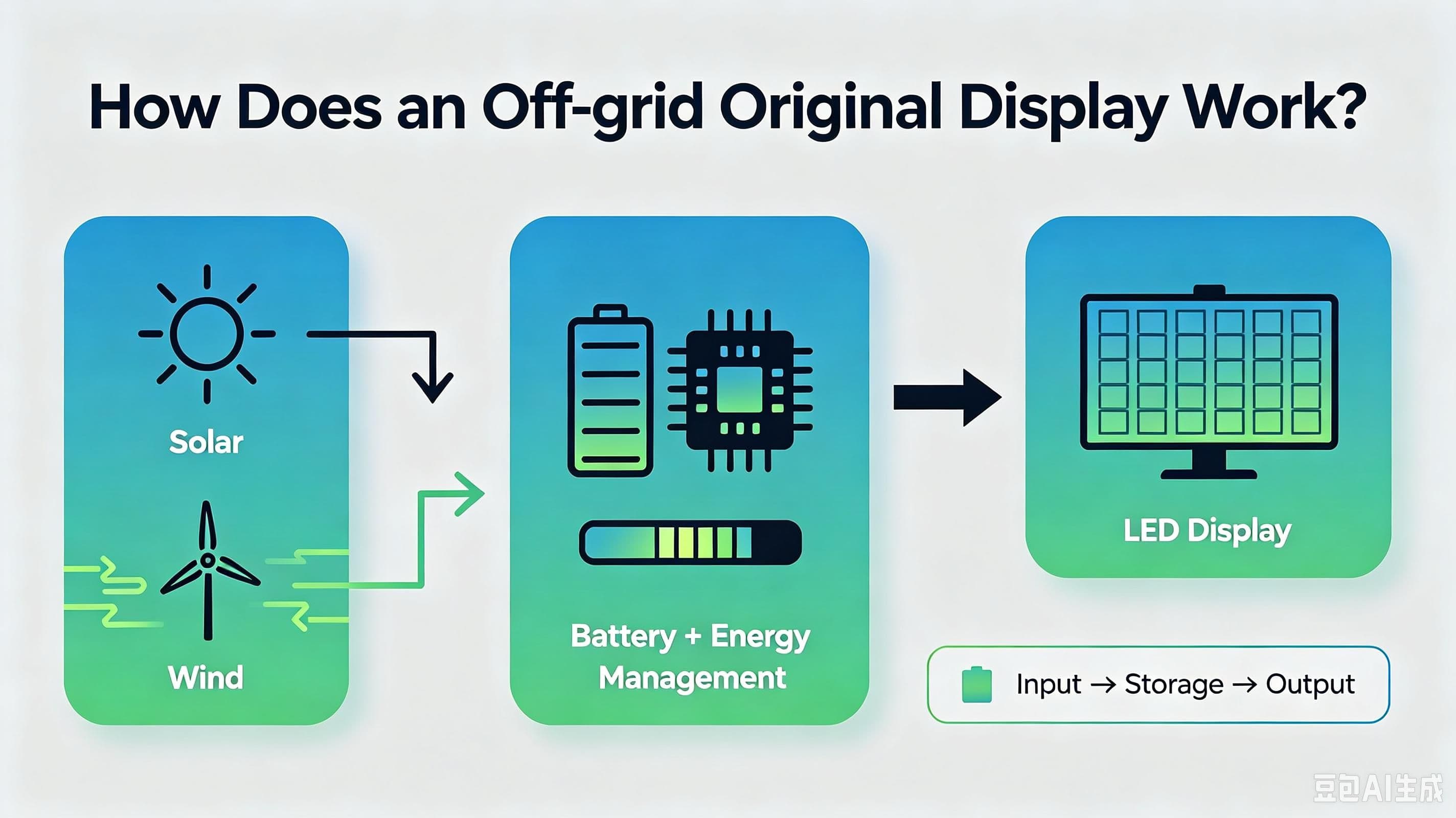
How Does Solar Power an LED Display?
LED displays require a stable power supply to operate continuously. But how can an LED display work in an outdoor location without relying on traditional grid electricity?
The answer is a combination of solar power generation, energy storage and intelligent energy management.
For an Off-grid Original Display, solar power is one of the main renewable energy sources used to generate electricity for the LED display.
How Does Solar Power an LED Display?
The basic energy flow is:
Solar Panels → Energy Storage → Intelligent Energy Management → LED Display
During the day, solar panels convert sunlight into electrical energy.
Part of the generated electricity can be used to power the LED display, while surplus energy can be stored in the battery system.
When solar generation is insufficient, such as at night or during cloudy weather, the stored energy can supply the display.
What Happens When There Is Not Enough Sunlight?
Solar power generation naturally changes according to weather and daylight conditions.
An off-grid display therefore does not rely on real-time sunlight alone.
The Off-grid Original Display combines:
☀️ Solar Power
🌬️ Micro-Wind Generation
🔋 Energy Storage
🧠 Intelligent Energy Management
When solar generation decreases, stored energy can help maintain display operation. Micro-wind generation can also provide additional renewable energy when suitable wind conditions are available.
This combination creates a more flexible energy system than a solar-only solution.
How Is Energy Managed?
The intelligent energy management system coordinates:
Renewable energy generation
Battery charging and discharging
LED display power consumption
Display brightness
Operating schedules
Energy monitoring
This helps match the display's power consumption with available renewable energy and stored energy.
What Factors Affect Operating Time?
The operating time of a solar-powered LED display depends on several factors:
Solar Capacity
Larger solar capacity can generate more electricity under suitable conditions.
Battery Capacity
A larger energy storage system can provide more stored energy when generation is insufficient.
LED Power Consumption
Display size, brightness, refresh rate and operating conditions all affect energy consumption.
Daily Operating Hours
Longer display operating times require more energy.
Local Weather Conditions
Sunlight, wind conditions and seasonal variations affect renewable energy generation.
For this reason, the renewable energy and storage system should be designed according to the actual application environment and display requirements.
Where Can Solar-Powered LED Displays Be Used?
Solar-powered and off-grid LED display systems can be suitable for locations such as:
Rural bus stops
Highways
Fishing ports
Tourist attractions
Campsites
National parks
Forest parks
Remote communities
Outdoor recreation areas
These locations may benefit from digital information services while having limited or inconvenient access to conventional grid power.
Solar Power + Wind + Storage for Off-Grid Display
Solar power provides an important source of renewable energy, but an Off-grid Original Display goes beyond solar power alone.
By combining solar power, micro-wind generation and energy storage, the system can generate, store and manage renewable energy to support outdoor LED display operation.
The goal is simple:
Deliver digital information where traditional grid power is difficult to access.
Where there’s wind and sun, there’s a screen.